
Archives
now browsing by author
Faroe (IV)
As announced, here is the latest update on the Faroes with some images of the old town of Tórshavn, the “Capital” of the Faroe Islands, an autonomous archipelago of Denmark.
1. The old town is located on a rocky outcrop, sort of peninsula in the harbor.
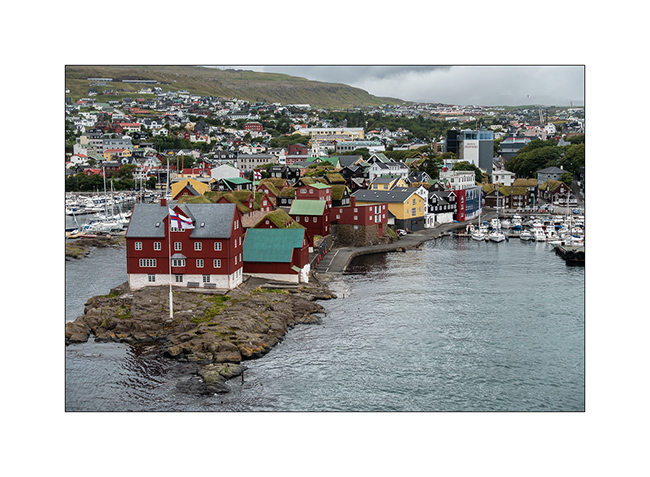
2. There are many traditional houses with their roof covered with moss and grass.
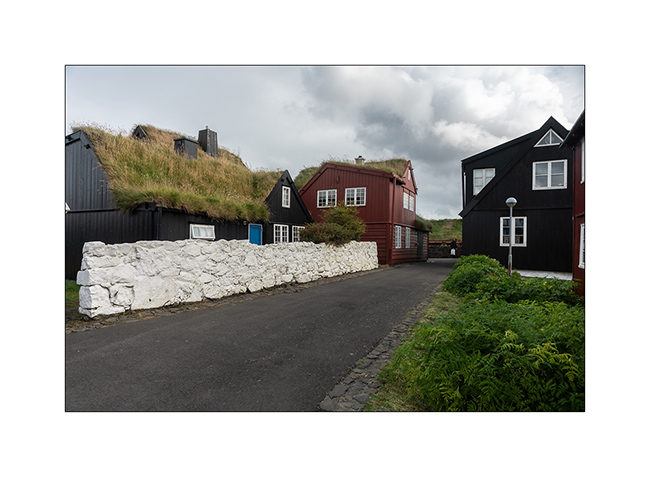
3. “Tiny house” 😉
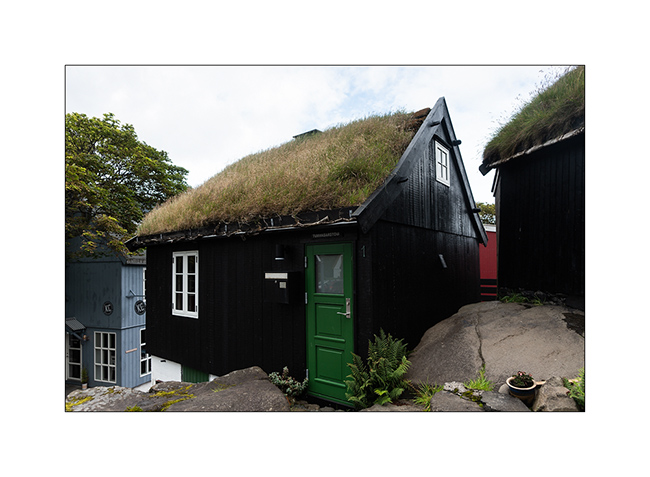
4. Alley.

5. The church…
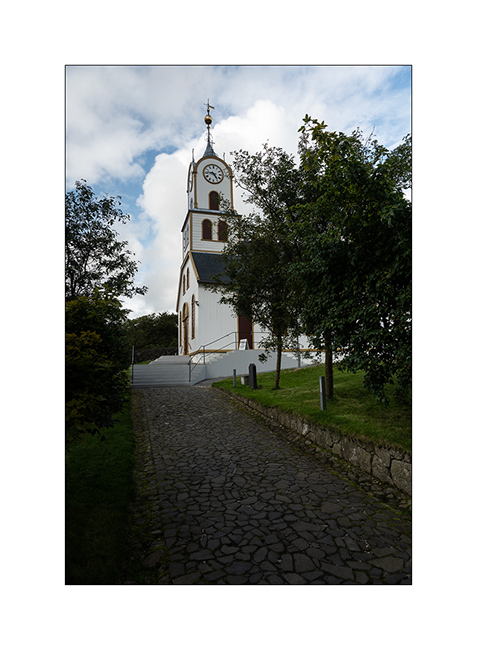
6. … Sober inside.
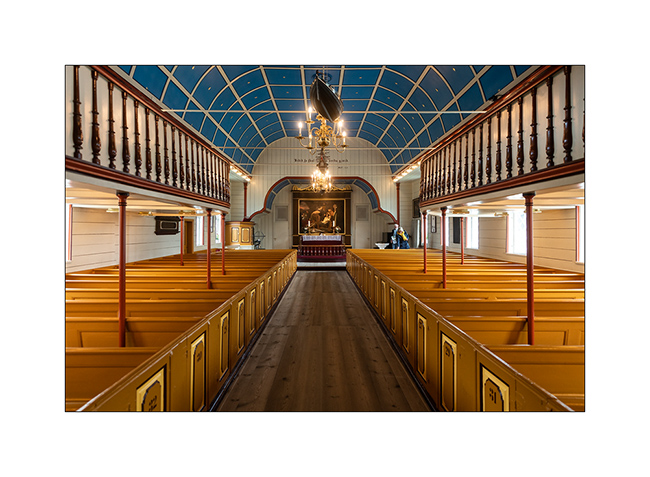
7. …
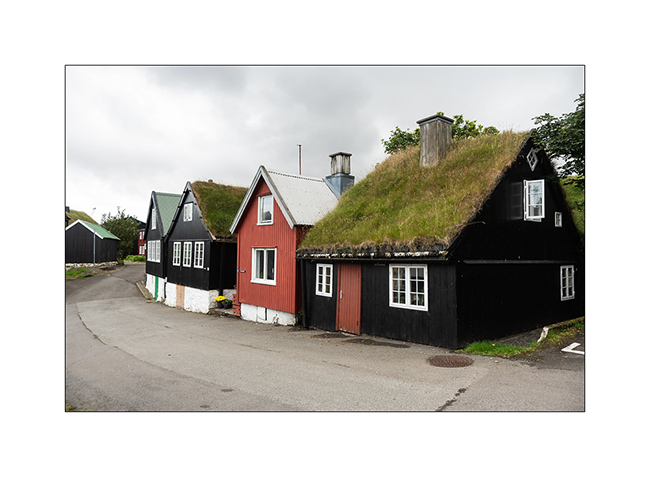
8. The oldest part.
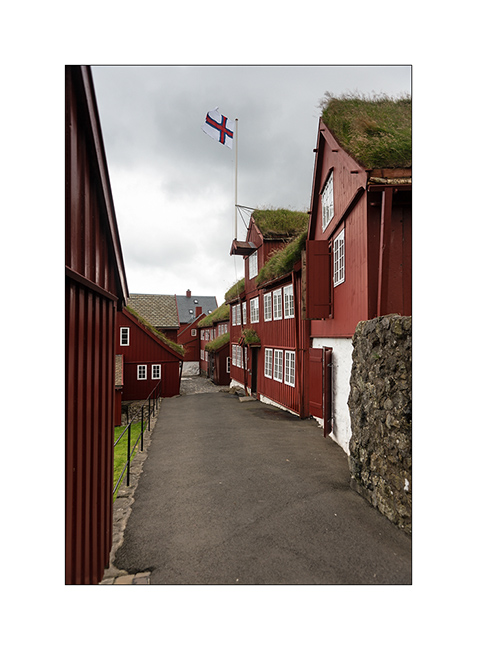
9. Entrance…

10. The marina and its lively pediment.

11. Twilight from the VLV camp.

12. Sheep are everywhere and live in freedom.
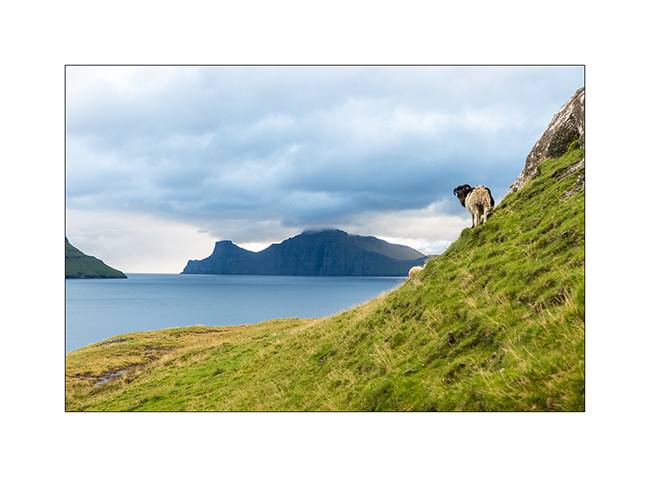
13. Some have escaped mowing for some time!

14. There are many who are all or partially dark.
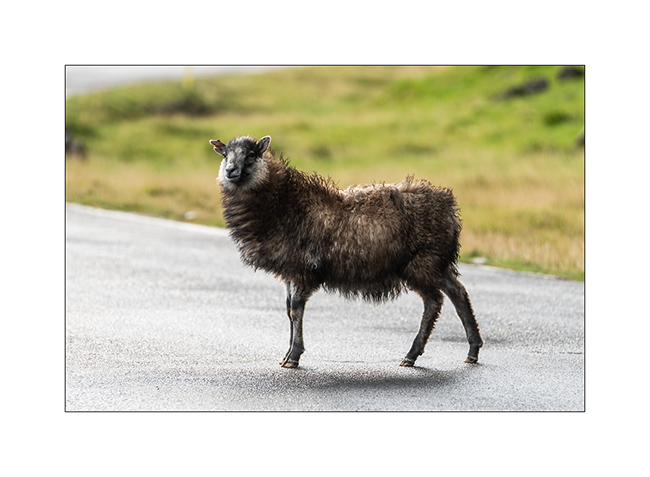
15. Karsoy Island in the morning.

To be followed in a few days with the crossing to Iceland by ferry. Thank you for following us. 😉
Faroes (III)
Let’s continue the journeye…
1. Arriving in Tjornuvik, another isolated village known for its black sand beach, one of the very few beaches of the Faroes. The place is famous for surfing because the bay opens on the North Atlantic and have big waves when it’s windy.
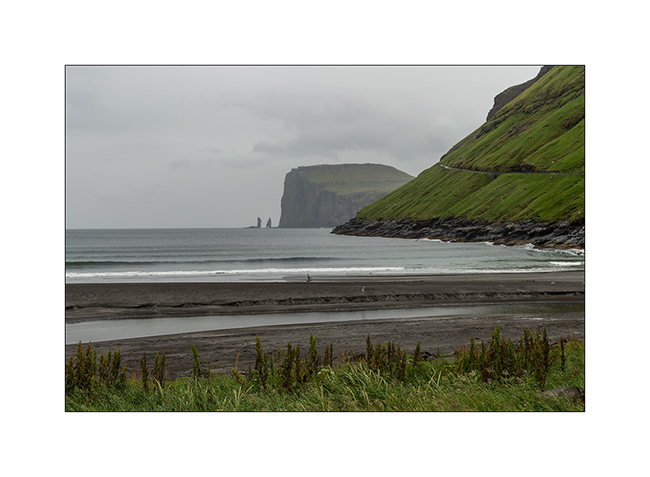
2. The village is nestled at the bottom of the bay.
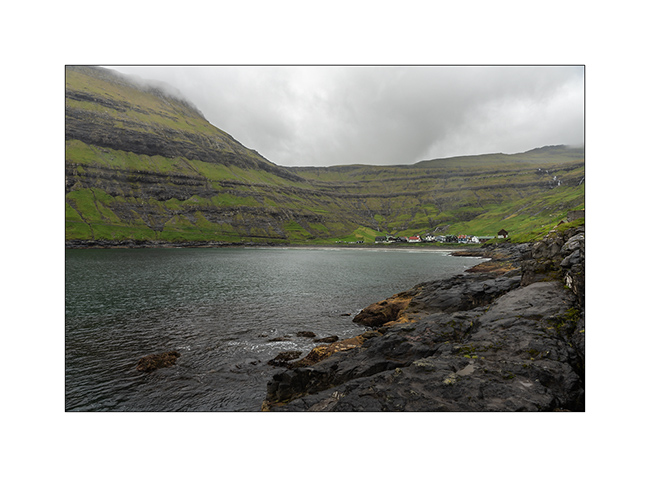
3. Overview as the rain doubles.
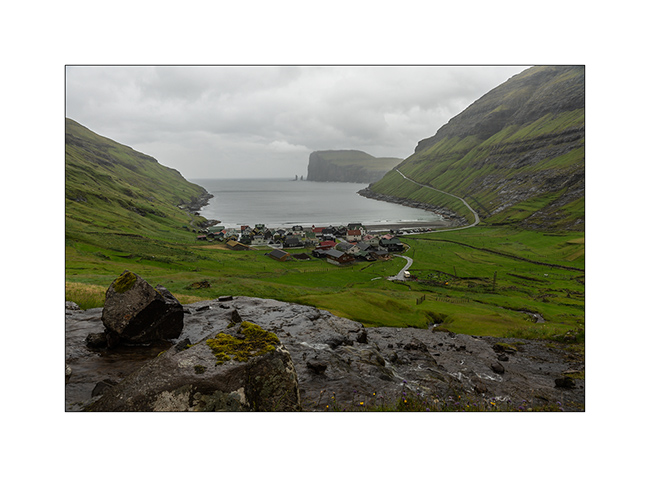
4. Here’s something I hadn’t seen before: a method to dry the hay that will feed the sheeps during the winter. As it rains all the time, it is arranged in walls. The constant wind prevents the grass from rotting and allows it to dry.
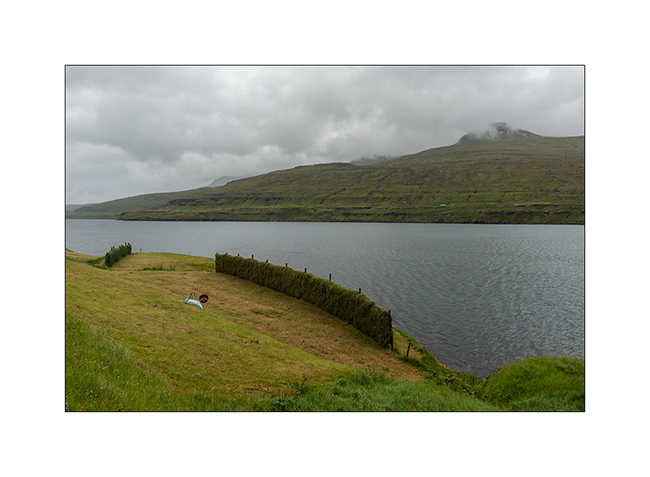
5. Rest zone!
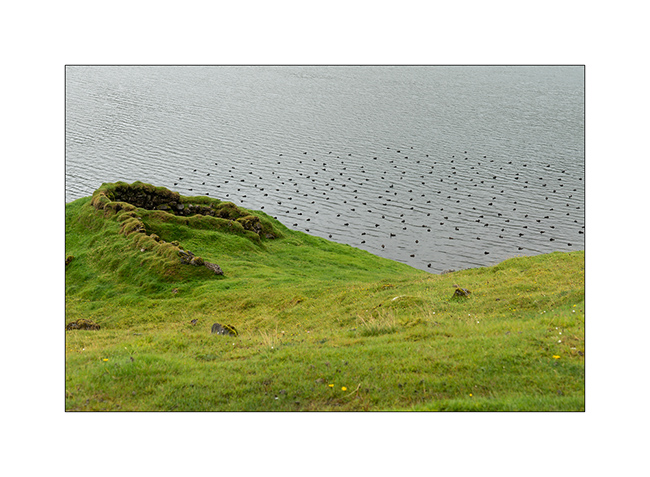
6. Little pass on the way to Gjógv.
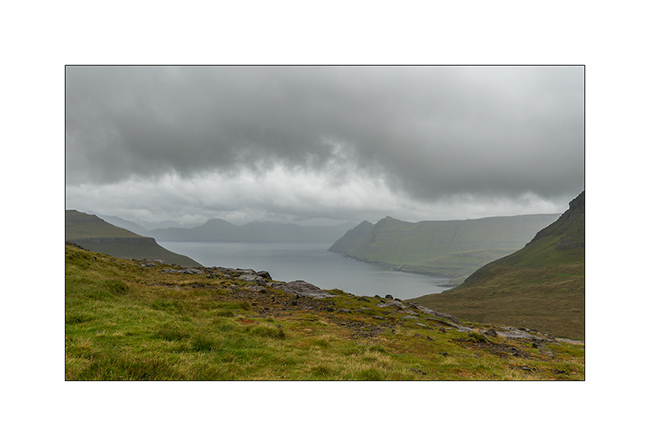
7. Arriving at the village, still in the rain.

8. It has a privileged natural shelter.
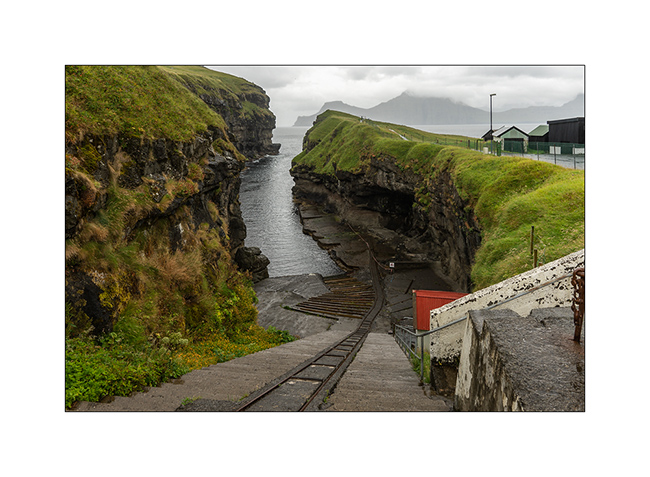
9. Traditional houses…
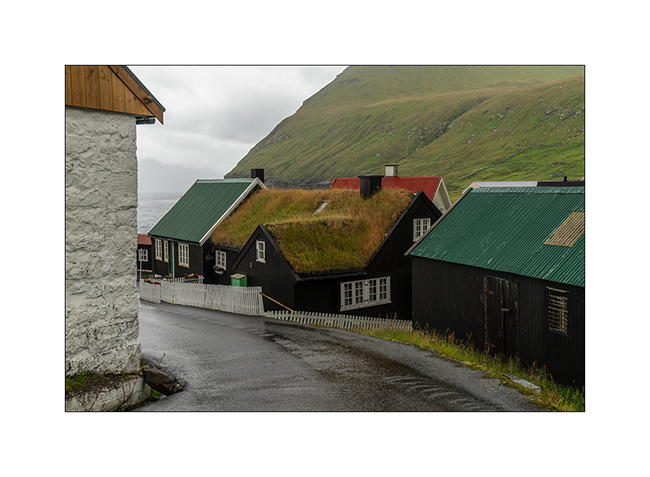
10. …
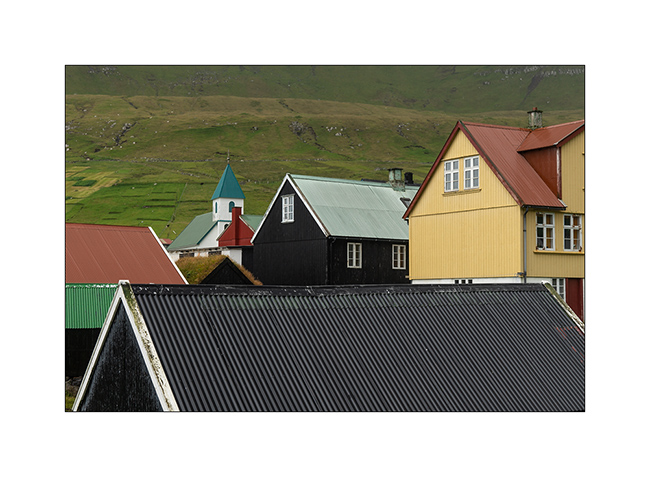
11. Last seen before leaving…
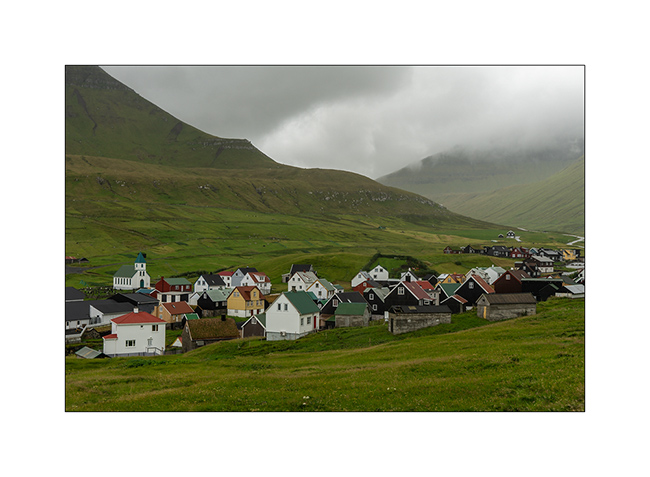
Because three days pass quickly, the next article will introduce you to the old city of Tórshavn, the capital, and the ferry crossing.
See you soon here 😀
Faroes (II)
Here is the continuation of my discovery of the Faroes. These islands are right in the Gulfstream, this warm oceanic current which gives to Scandinavia and more largly to Europe its temperate climate compared to its latitude. As a result, average temperatures vary very little between summer and winter: 48-50 F in summer and 37-39 F in winter. On the other hand, there is on average between 260 and 280 days of rain per year and 300 days with wind! VivaLaVida stopped there for only three days but was treated to her part of rain, sometimes fine drizzle, sometimes heavy rain. No wonder the mountains are dripping everywhere! There is not 100 yards without a stream that comes down.
I took advantage of the good weather of the first day to discover two spots among the best known of these islands…
1. On my way, the wind creates clouds on the cliffs…
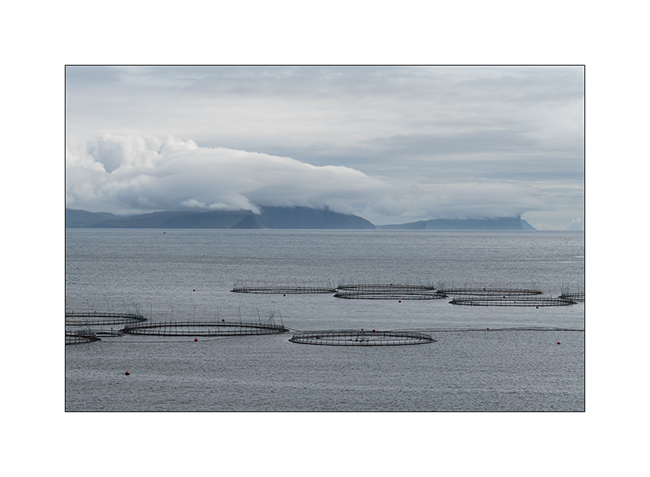
2. First spot: Lake Leitisvaten, the largest lake in the Faroes, perched about 40 yards above the ocean !

3. It flows into the Atlantic by a beautiful waterfall.
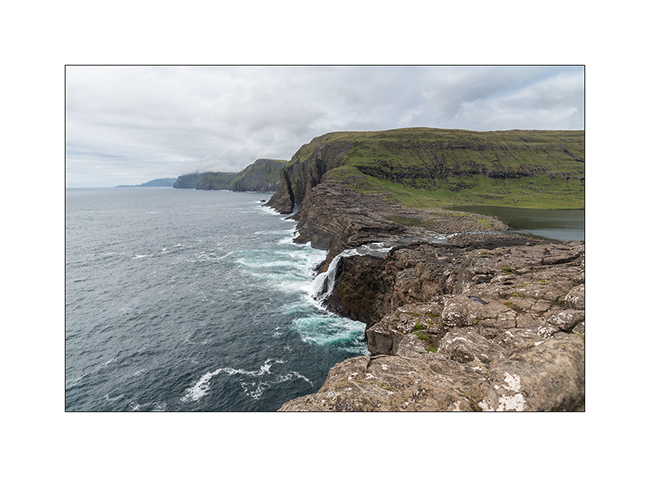
4. The cliff that I climb is impressive! The silhouette at the top gives the scale, well… if you can see it! 😉
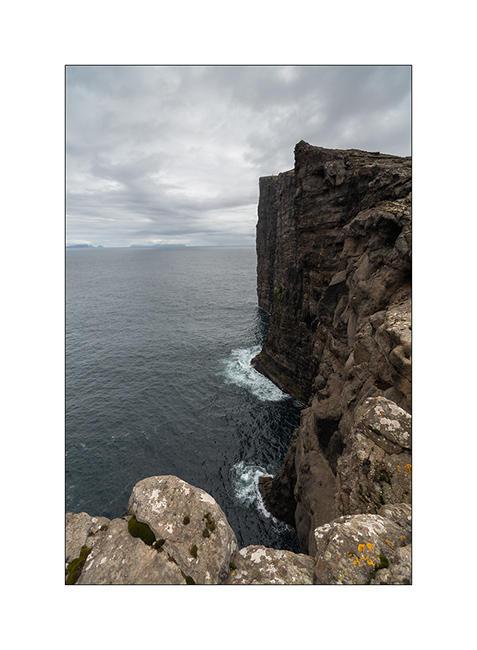
5. From the top, the panorama is breathtaking! This image is an panorama of 4 vertical images.

6. Traditional boat garage along the lake, on my hike back.
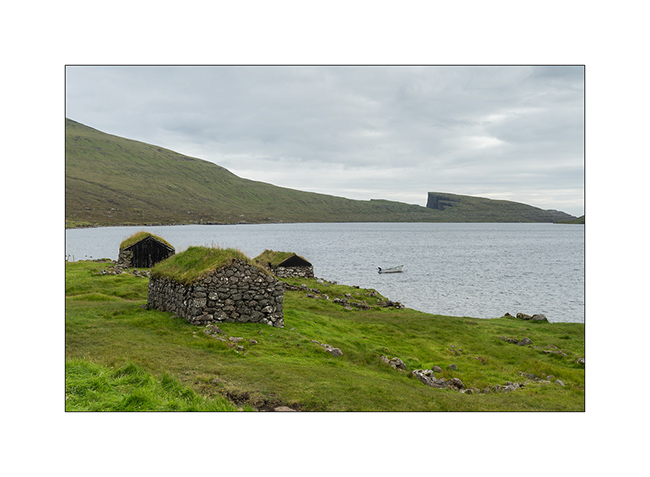
7. Continuing the road to the North, I discover this small village, just lovely… In the distance, the arch of Drangarnir.

8. And here is the second must-see spot: the Gasadalur waterfall. The small village of the same name was one of the most isolated of the Faroe Islands until the construction of a tunnel in 2006. Before, the only way to reach it during winter was the sea where a summary natural harbour allowed small boats to land by nice weather. In 1962, the village remained isolated for more than 5 consecutive months because of a series of Atlantic depressions.
The waterfall is 50 yards tall.
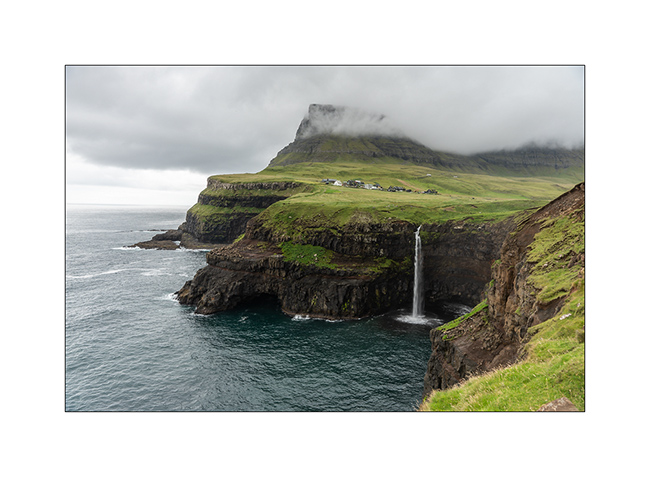
9. View from the top of the waterfall, with at the foot of the cliff, the rocks that allowed the landing…

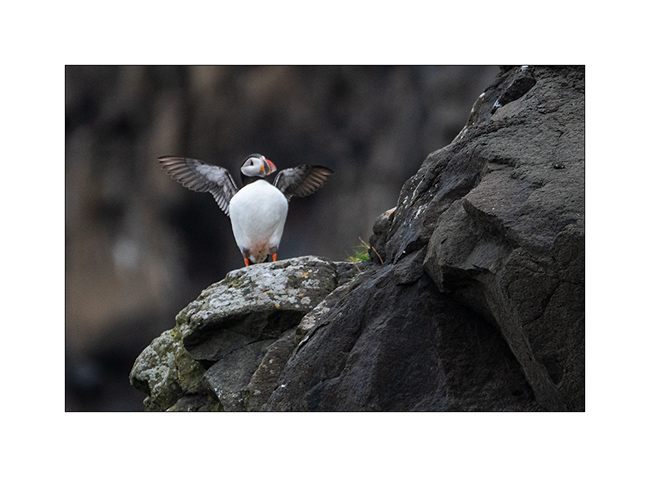
10. First meeting with the puffin in the cliffs…
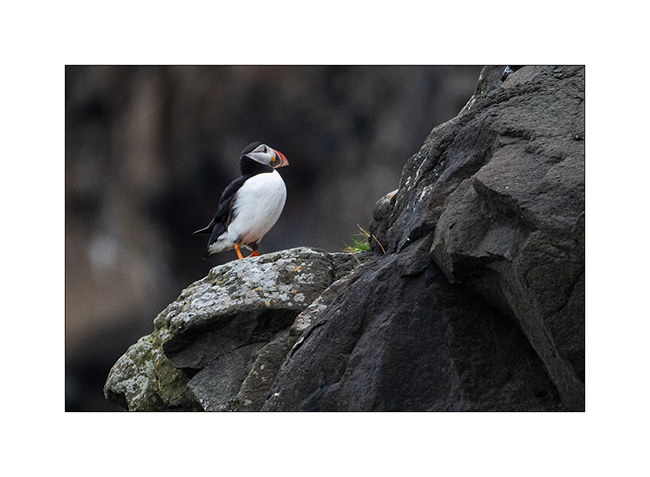
11. What a beautiful bird!
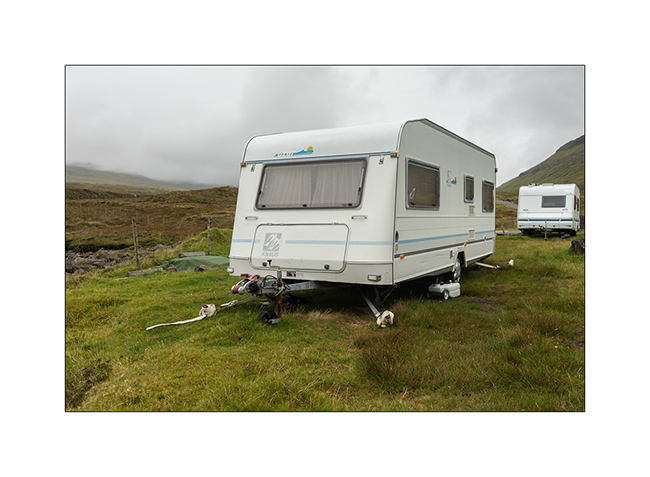
12. Here, people attach caravans so they cannot fly on windy days, that means everything!
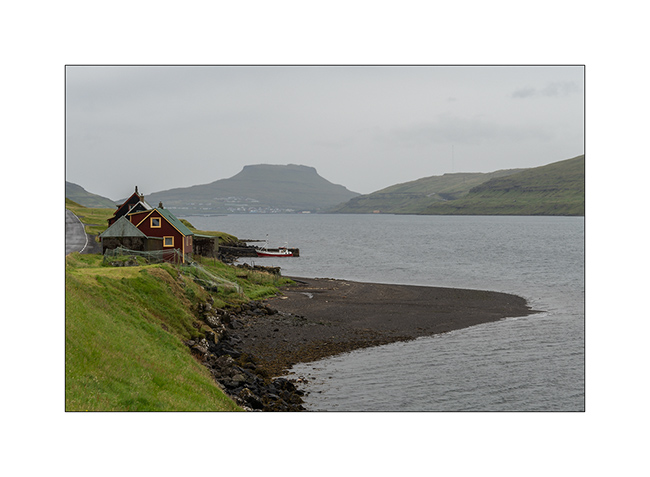
13. Going up a fjord towards the village of Tjornuvik.
14. Waterfall along the VivaLaVida’s way.
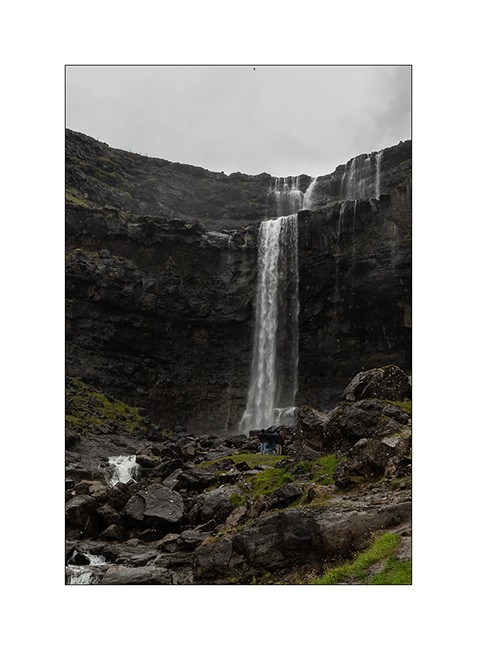
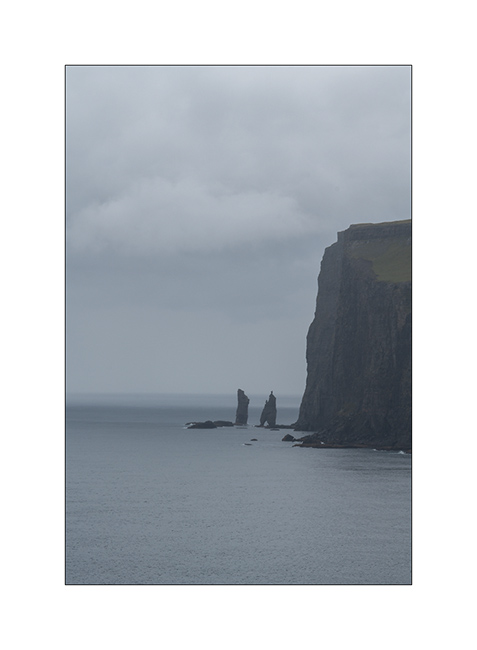
15. Cliffs in the rain. The Faroe Islands have among the highest cliffs in Europe. Some are half a mile high.
In the next update, I will show you the black beach of Tjornuvik and other parts of these beautiful islands. Stay tuned!
Faroes (I)
Having taken the boat from Hirtshals to Iceland, I decided to stop for three days to discover the Faroe Islands that attracted me for a long time. As I write this update from a small lost village, in the pouring rain, and don’t regret my choice. These islands are really beautiful, sheep heaths as far as the eye can see. In fact, there are only a few tens ofinches of humus on the substrate, sometimes basalt, sometimes black stone. The habitat is made of small villages of multicolored wooden houses scattered along the coast and located where there was an option of docking since it’s the Vikings who are the oldest colonizers of these islands. Here are some first pictures of VivaLaVida’s journey.
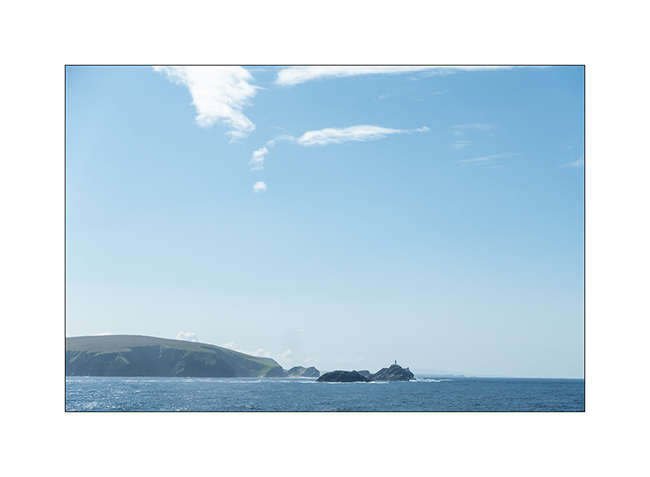
1. Before landing to the Faroe Islands, the ferry passed by the extreme Northern tip of the Shetland Islands.
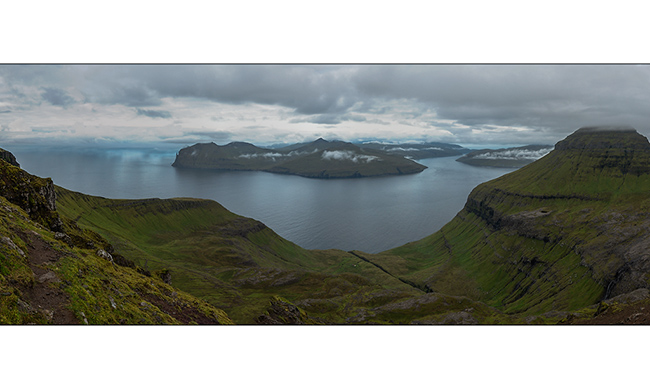
2. While VivaLaVida landed at night, a small walk from my camping spot makes me discover an impressive panorama!
3. The day is announced dry and with some sun. Is it it coming from the South ?
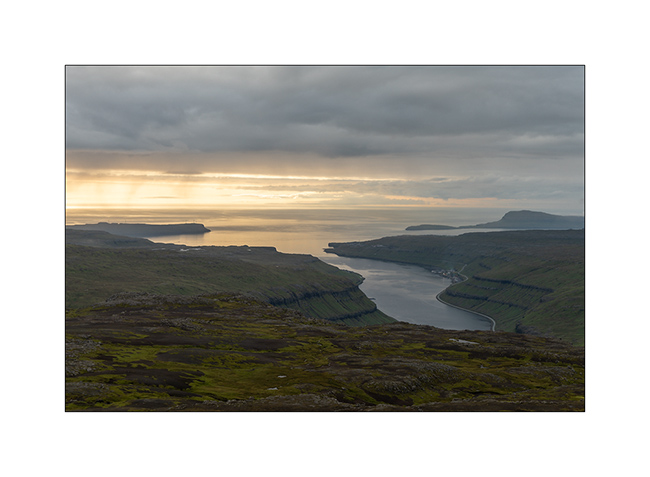
4. Sheep stable…
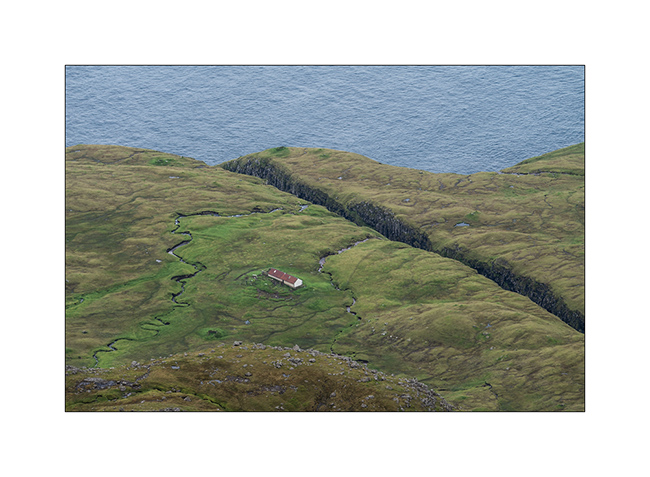
5. Each island is separated from its neighbor by one or more fjords.
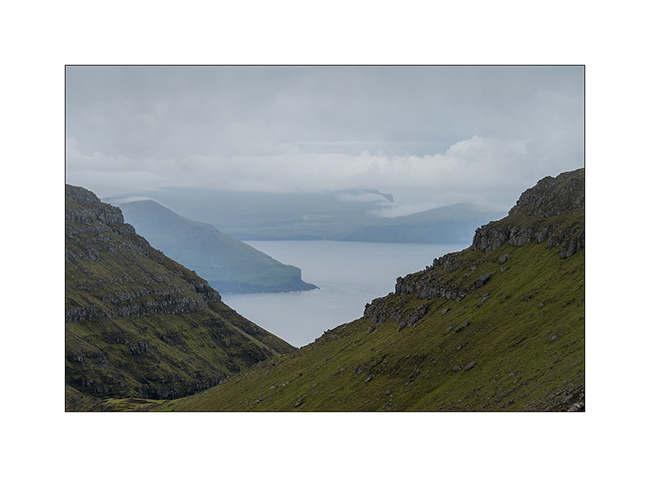
6. Mix of rocks and mosses…
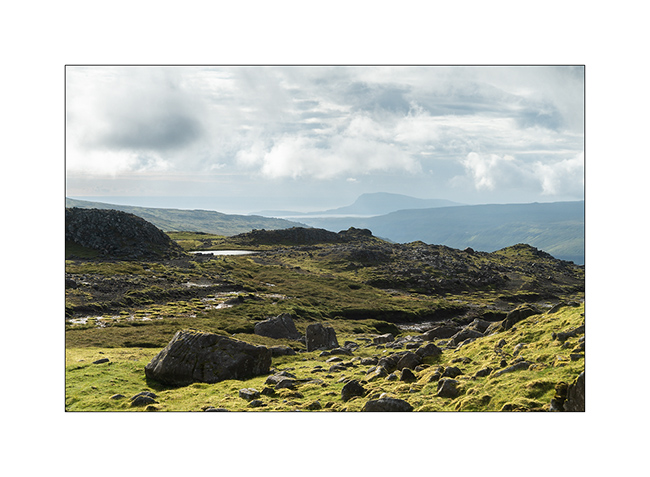
7. And here is the sun coming!
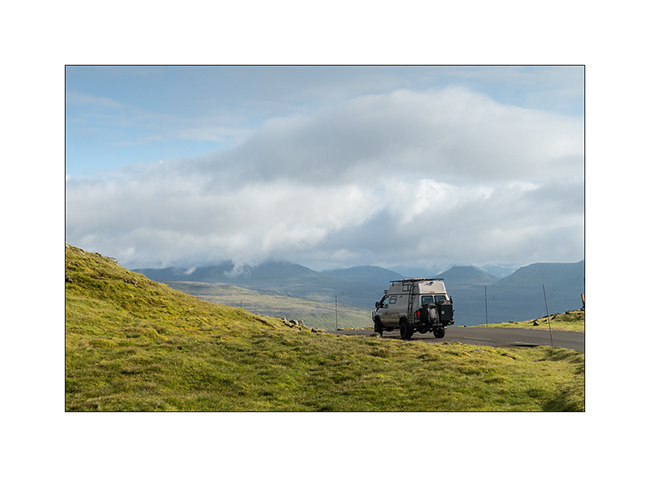
8. Going towards Saksund, VivaLaVida is driving along a fjord.
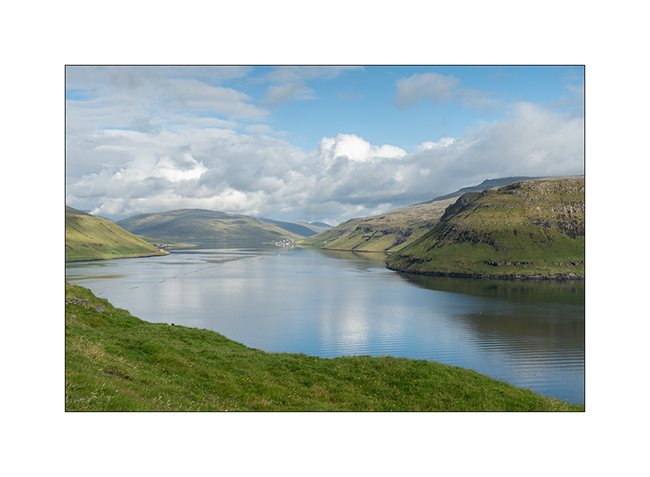
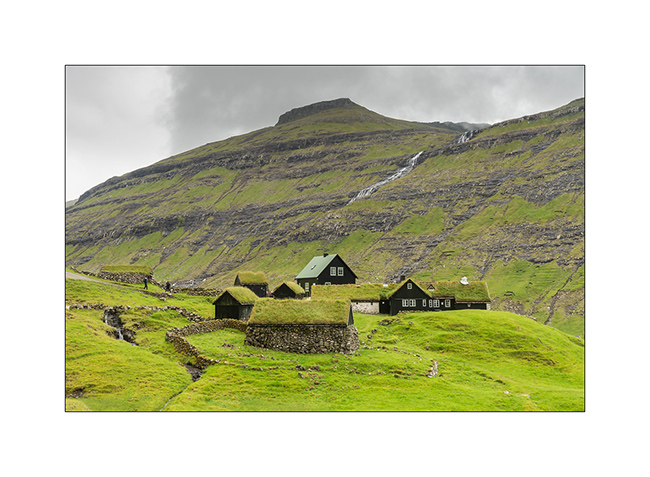
9. Saksund is a tiny hamlet, one of the first built on the main island, and still has several traditional very old houses.

10. Its old church.
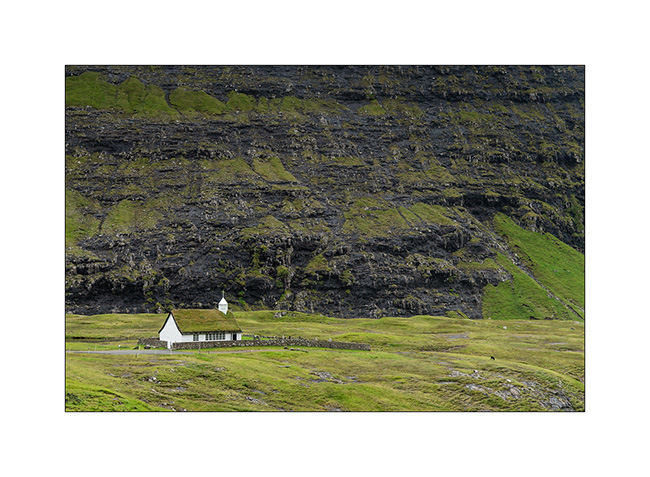
11. Specialty of these Northern countries, the roofs covered with moss and grass.
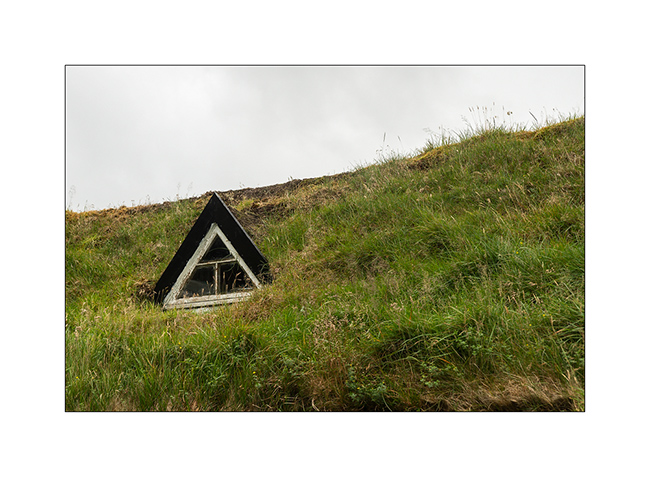
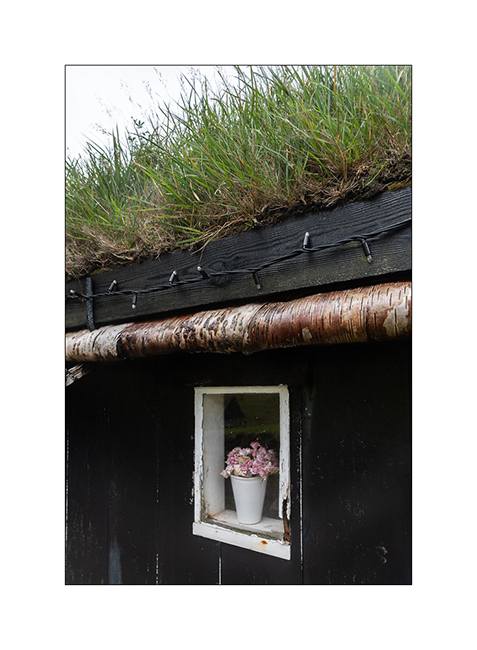
12. Window…
13. The village.
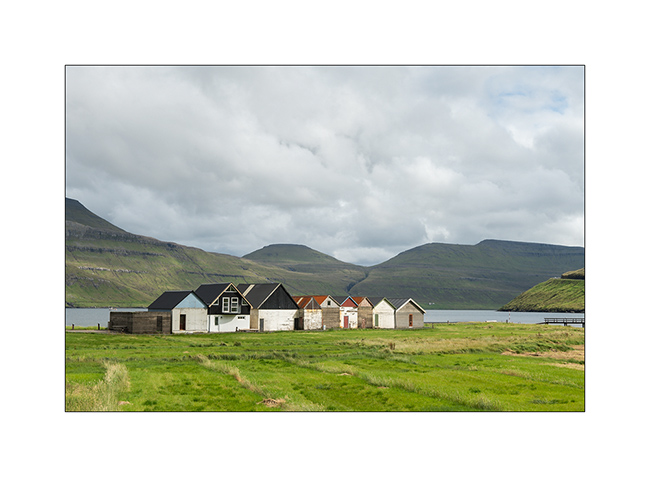
14. Boat garages a bit further along a fjord.
I will continue in a future update, just to avoid indigestion… 😉
Start…
After a few busy days before holidays, I left Emile and Isabelle who will join me in a few days and took the road to the North. There are 1’200 miles waiting for me to reach Hirtshals, at the Northern tip of Denmark, where leave the only ferry that joins the Faroe Islands and Iceland. Obviously not the most fun part of the trip but you have to do it…
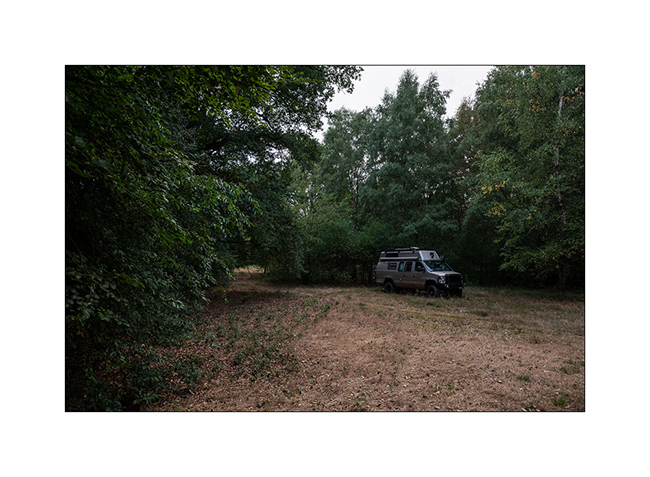
1. Boondocking in Northern Germany.
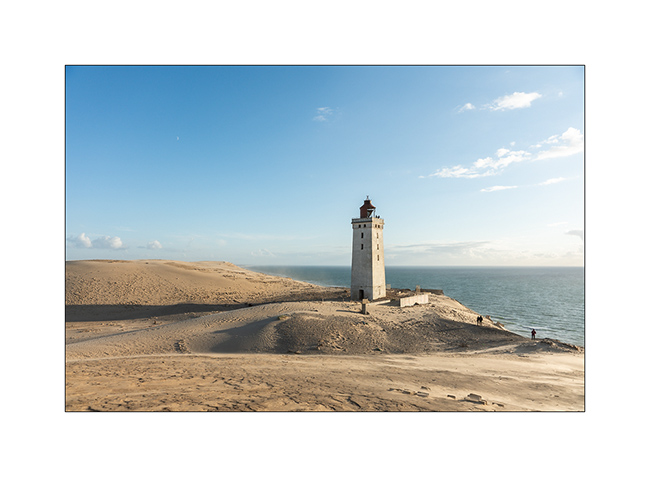
2. Arrived at destination in the middle of the afternoon the day before the ferry, I took the opportunity to discover an abandoned lighthouse in the middle of the dunes…
3. Enjoying a spectacular sunset on the North Sea.
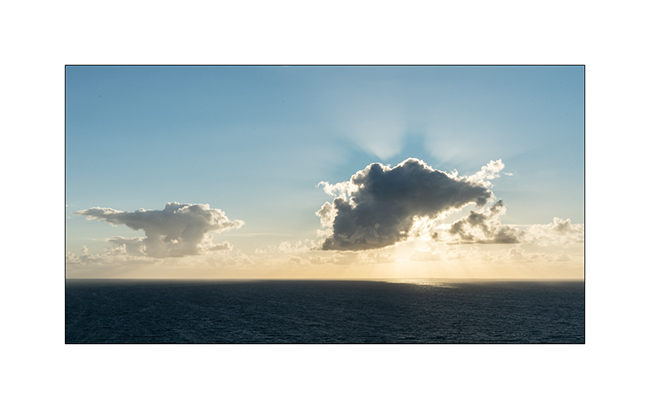
4. …

5. …
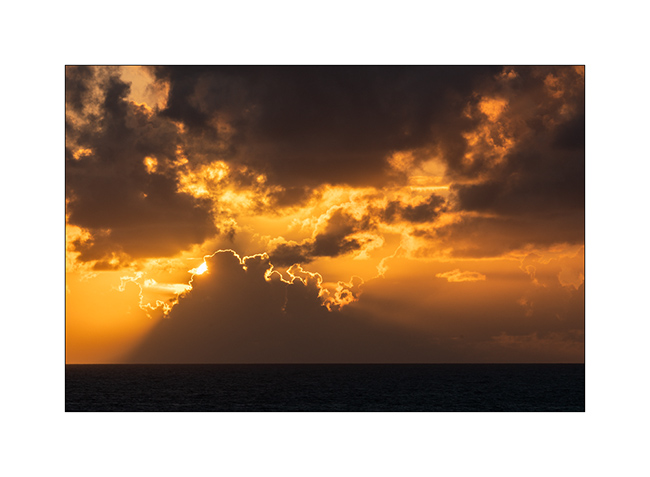
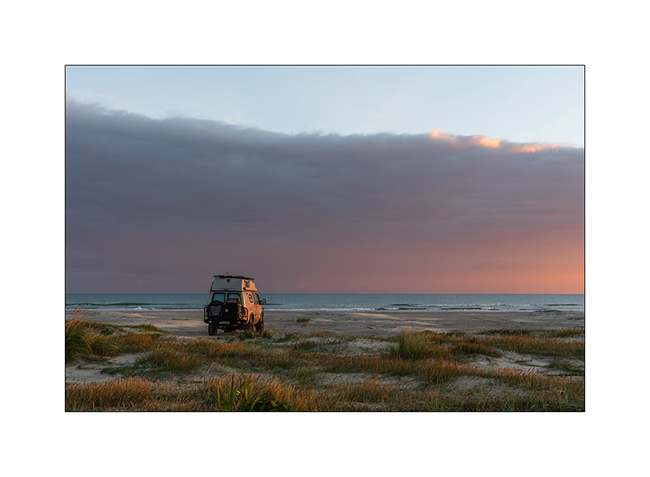
6. I then went to sleep on the beach, East of Hirtshals, where the sunrise was colorful.

7. …
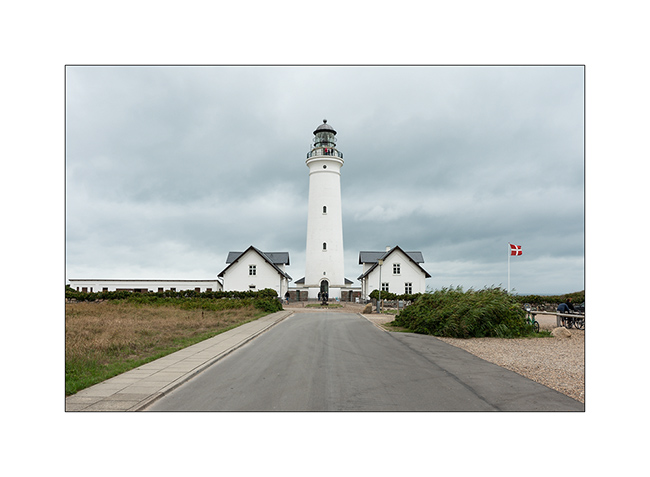
8. After a visit to a local hairdresser, visit the Hirtshals lighthouse.
9. It’s then time to go in line for VivaLaVida to board.

10. Right on time, the ferry lifted anchor towards the Faroe Islands, with a good gale announced for the crossing…
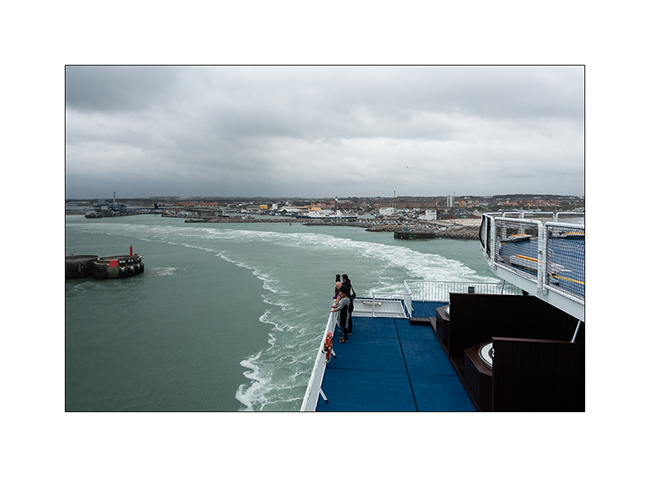
That’s it for this short update written on the ferry while it was beating quite a bit… 🙂
I will stop tomorrow for three days in the Faroes, to discover these islands that have attracted me for a long time…
To be followed soon !
Preparations
I had announced a future destination for VivaLaVida in the last article, it is time to unveil it: VLV will soon take the ferry to the Faroe Islands and Iceland!
It has been a long time since I wanted to go back there but it wasn’t planned for this year. The explosion of mass tourism in Iceland led Icelanders to legislate to preserve the fragile nature of their island. Wild camping is already banned on the South coast since 2016 and it seems that it would be soon extended to the entire country. We decided to go there before the regulations would interfere too much with VLV’s preferred way of travel.
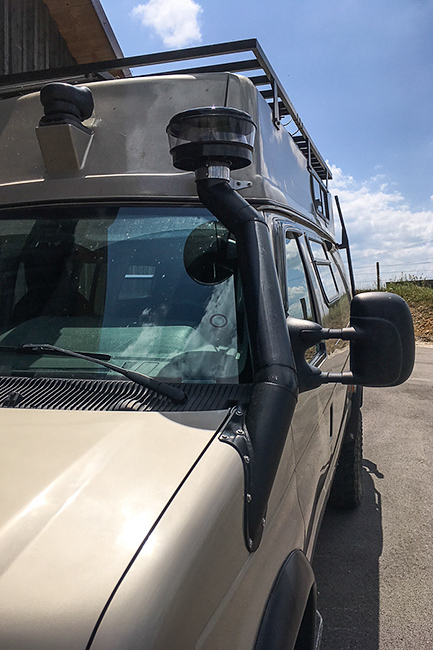
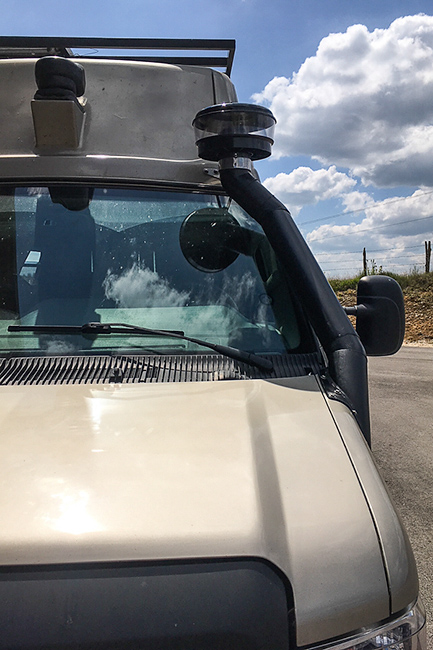
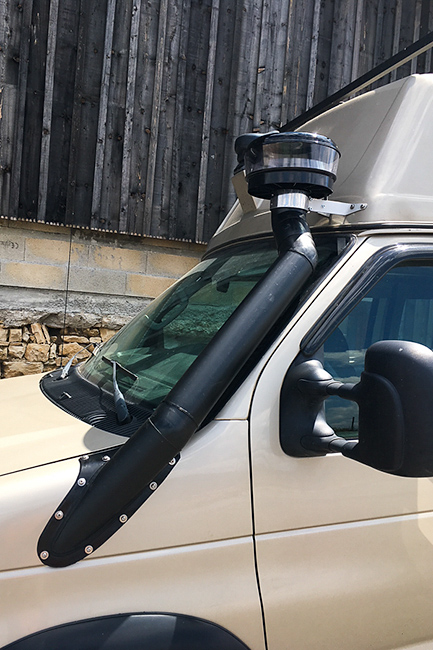
Some of you know that Iceland really nmany more or less deep fords, the meltwater of the glaciers having no choice but to flow on the volcanic soil without humus on most of the island. It has been a long time since I wanted to equip VLV with a cyclonic pre-filter and it was an opportunity to create a snorkel to increase the fording capacity, nothing being available for the Ford E350 base.
The project was important because the vehicle isn’t designed to receive such an equipment. I first had to modify the filter air box by blocking the original air intake located behind the headlight, replacing it with a lateral opening in the driver’s side engine bay wall. Then, I had to design a part located in the room between the fender and the wall, going from the front end to the base of the windshield. There, an opening in the fender allows a pipe of diameter 110 mm to follow the windshield pillar to the pre-filter. All the parts were made of polyethylene, a solid material that welds rather well.
After nearly four weeks of work finishing each evening between 11 and 12, VivaLaVida’s snorkel is now up and running! Here are some pictures to show the main stages of the project.
1. The modified airbox.
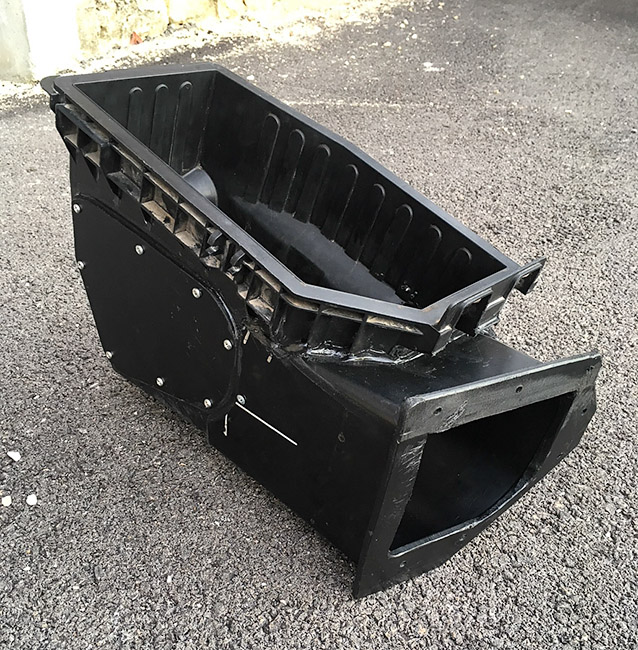
2. The flange joining the engine bay wall.
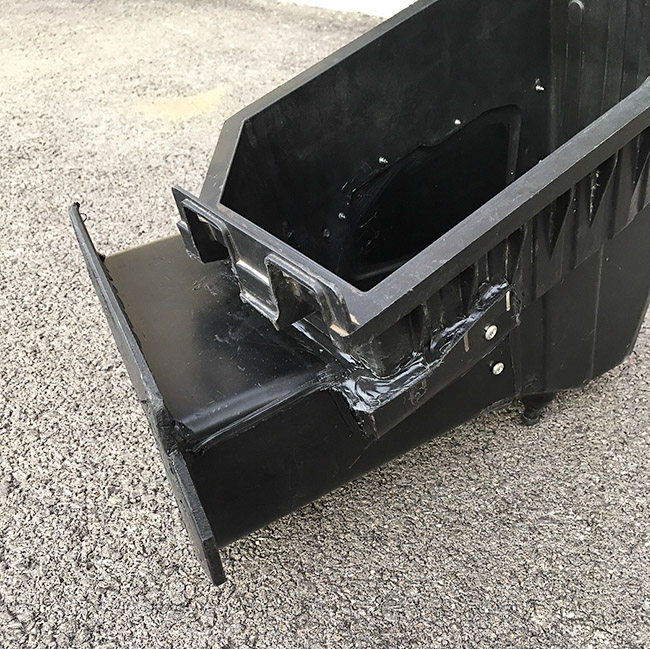
3. Opening in the wall.
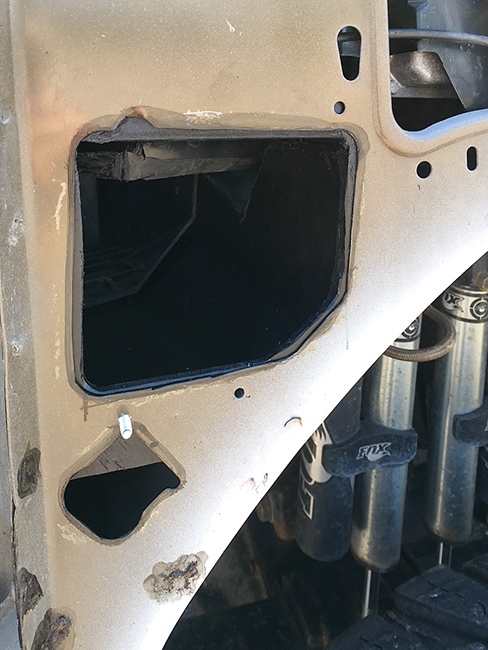
4. Intermediate part in preparation.
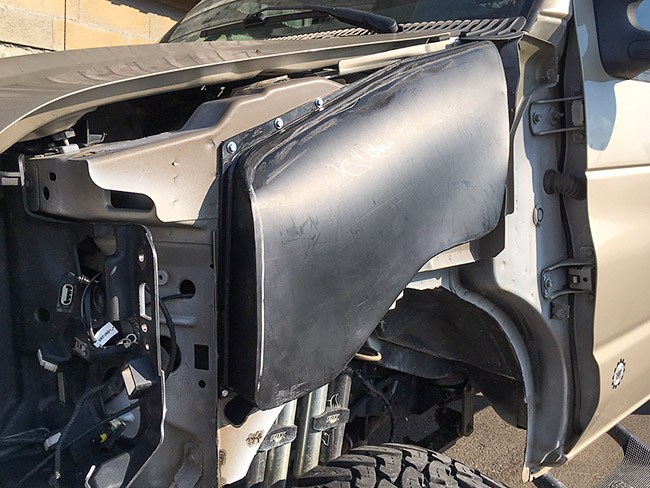
5. Ready to install with fender opening and body staples.
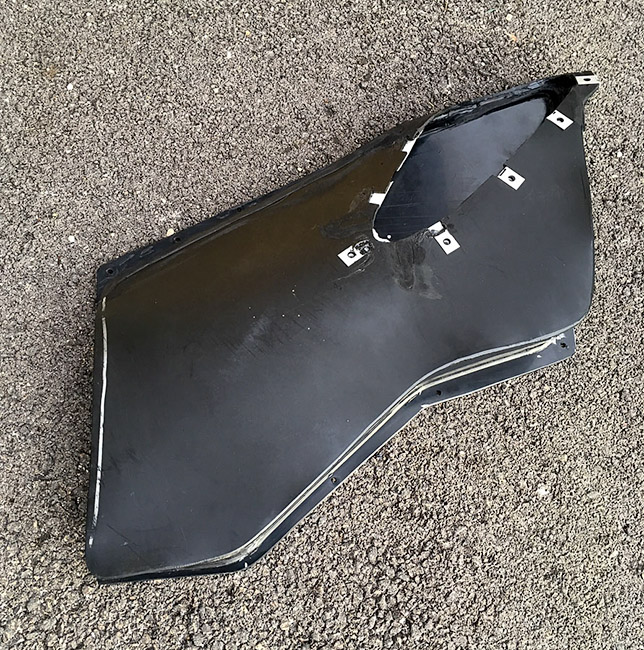
6. The pipe coming out of the fender and rising above the windshield.
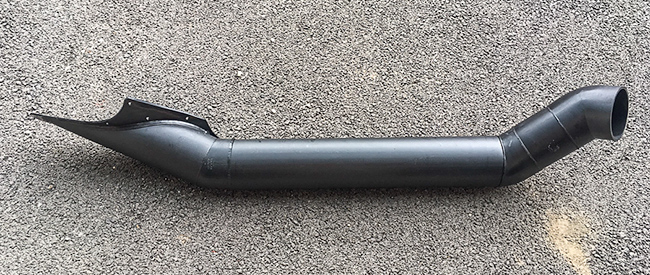
7. Final install on the fender.
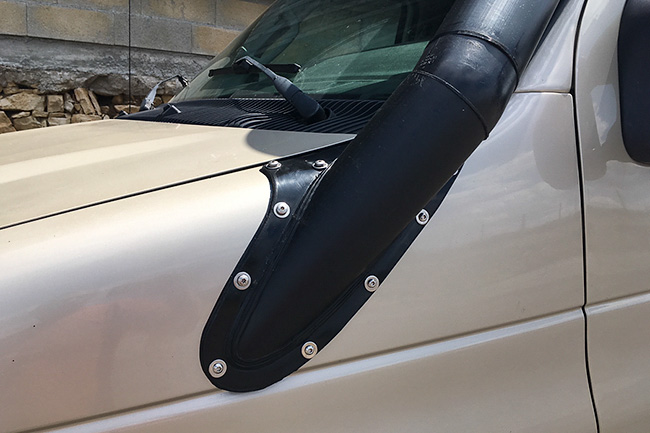
8-10. The finished snorkel.
I also did other work on VLV: replacement of start and leisure batteries. For those, previously grouping 3 AGM batteries of 105 Ah each, I opted for two Lithium batteries of 90 Ah, equivalent to approx. 400 Ah AGM. It is a big investment but the reliability and the additional energy capacity associated with a much higher lifetime than lead batteries makes it possible to make profitable over a few years. I also had the heater checked to minimize the risk of breakdown and it turned out to be the time to do it; the burner was quite corroded. Finally, I had to quench all the air-vents from axles, transmission, etc. by raising them above the level of the doors in anticipation of deep fords, thus avoiding water to enter. And everything is not finished even if I start to see the end.
Departure to Denmark is set for August 15th and VivaLaVida should land in the Faroe Islands on the 19th. I will give you news around August 25th when I will pick up my family in Reykjavík for three weeks to discover together this wonderful Iceland…
So next to come soon! 😉
Little problem now corrected
Sorry, a little bug has upset the layout of the last article. It is now corrected. Thank you for your understanding.
First 2018 outing
After a snowy winter that lasted longer than the previous years, it was finally during the first weekend of June that VivaLaVida resumed service for a small outing in Ardèche (France) with the family. Here are some pictures of our boondocking…
1. First camp in a nice forest of Ardeche, South of France.
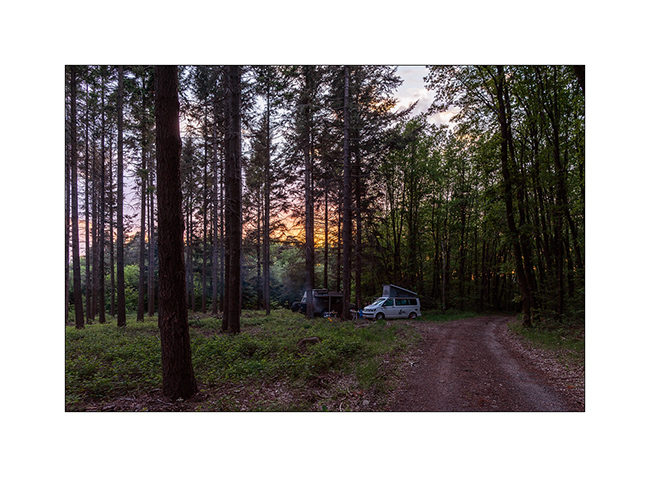
2. The camp fire.
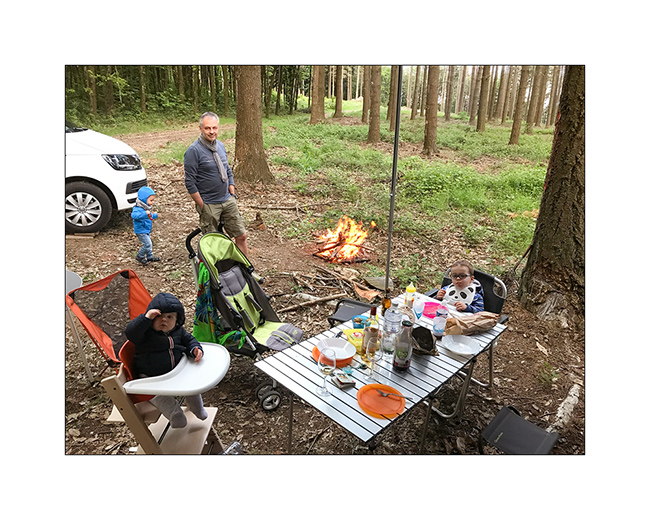
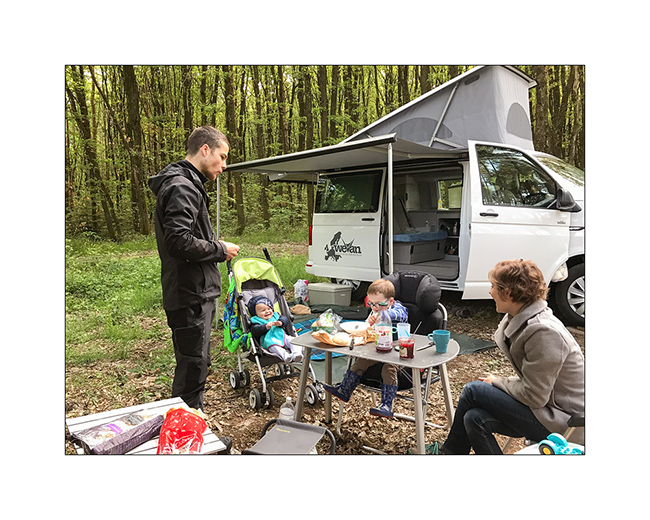
3. Isabelle’s brother and his family rented a VW T6 California. It was a little tricky with two little ones of almost three years and seven months!
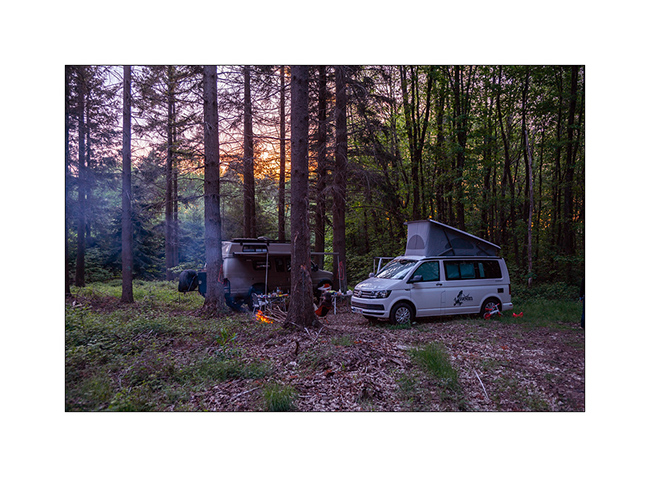
4. Some sunset colors…
5. In the morning, we celebrated Emile’s two years Birthday ! 😀
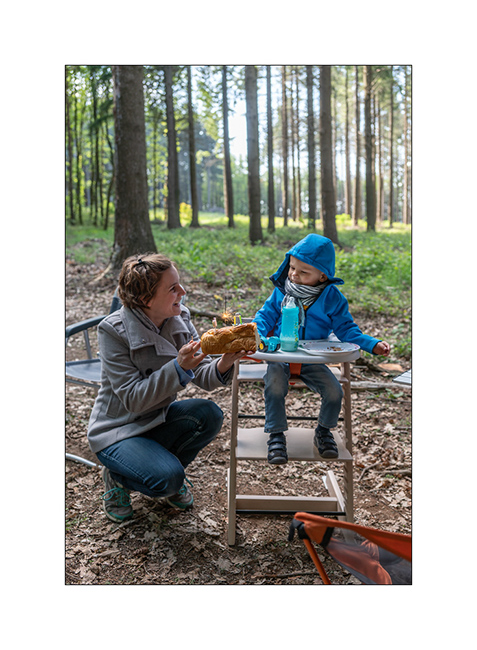
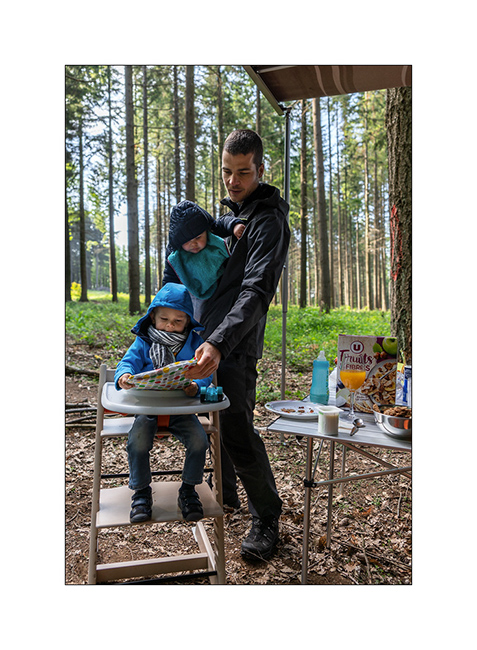
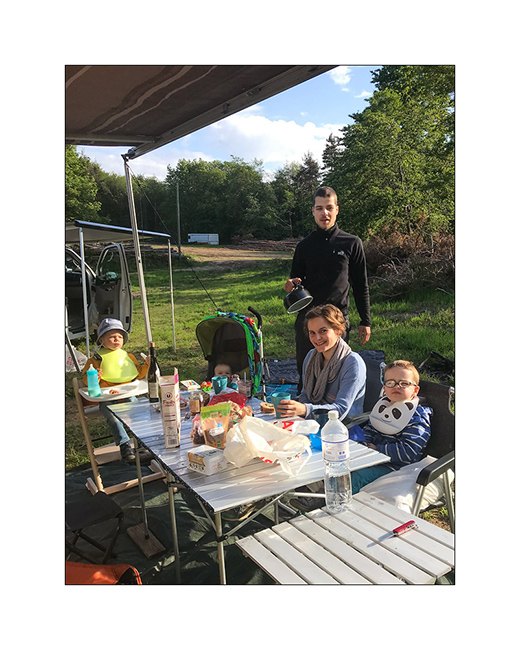
6. Breakfast…
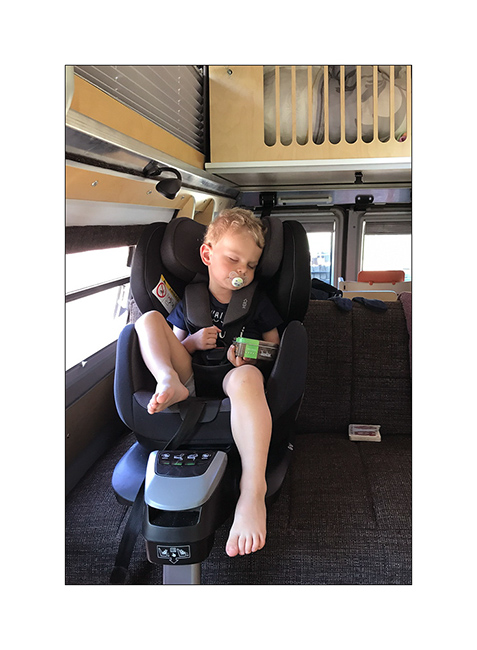
7. Emile still sleeps well in VivaLaVida.
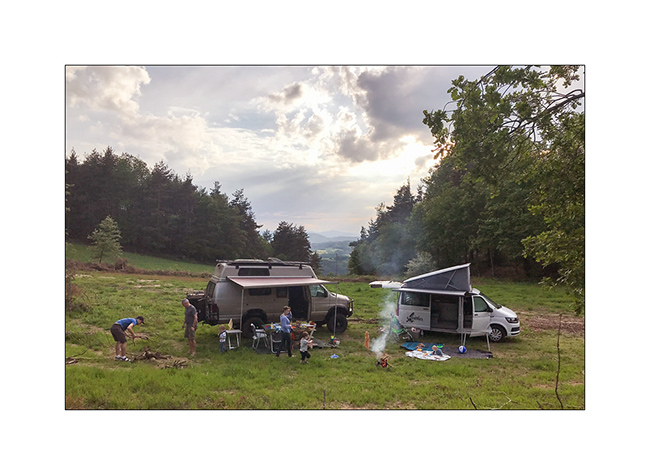
8. Our second wild camp spot in a clearing.
9. Emile having a great time!
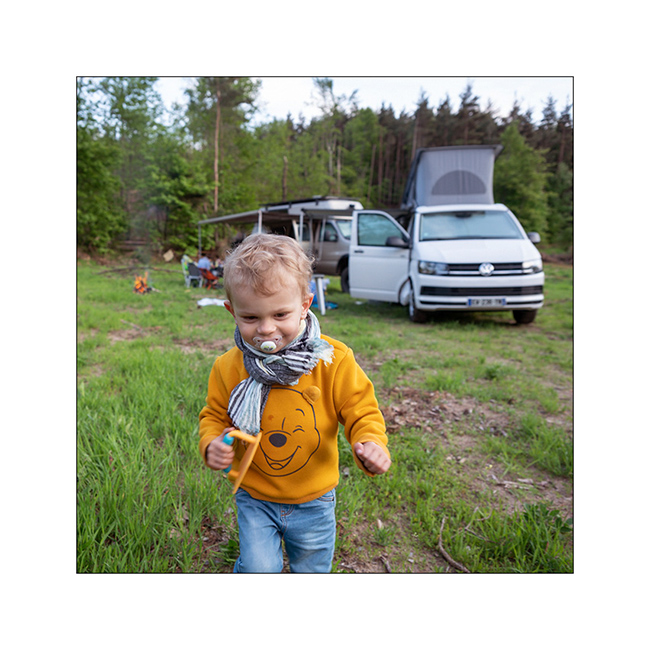
10. Sunny breakfast.
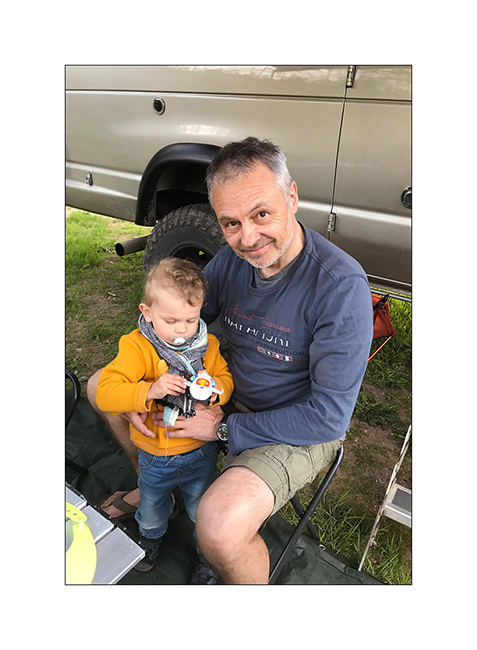
11. Emile and his dad.
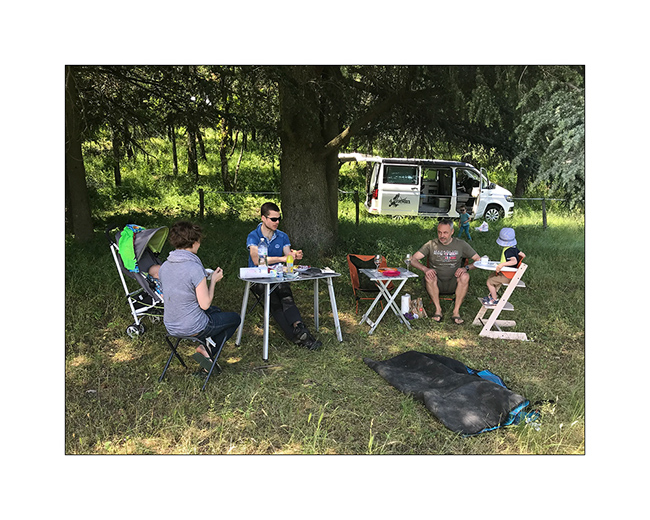
12. Last picnic before returning home. It was too short!!
That’s it for today.
The next outing is scheduled on the weekend of July 14th. Before, I ‘ve quite some work on VivaLaVida in preparation for our next trip to a destination that I’ll reveal soon. I will keep you informed of the work in progress…
Stay tuned!
Valaisan getaway (end)
Continuation and end of our great valaisan weekend…
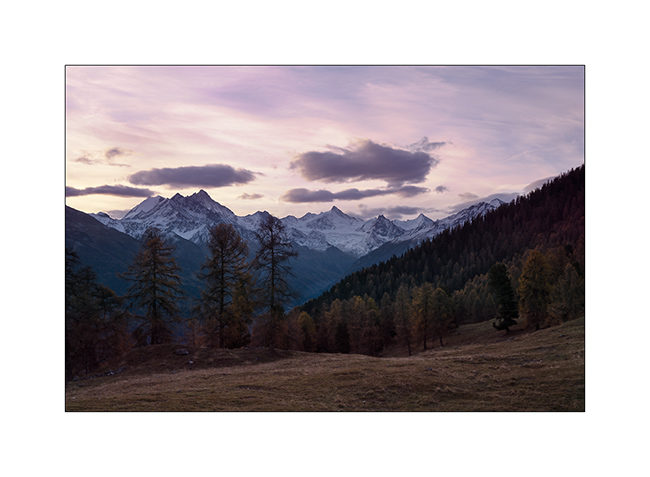
1. Gentle sunrise light over the summits.
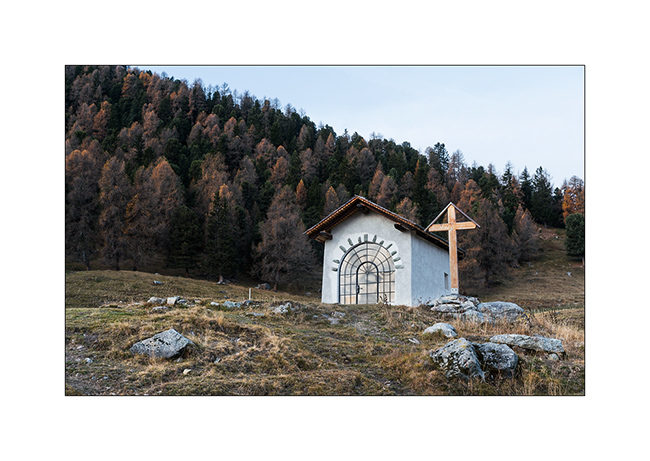
2. Chapel above Vercorin.
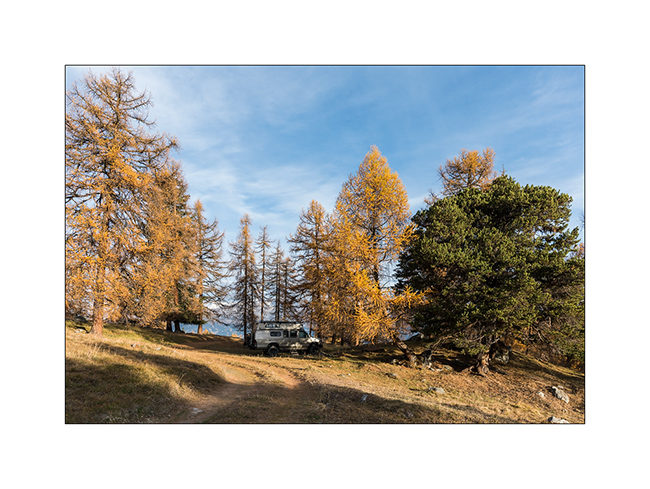
3. Our great camp spot in golden larches…
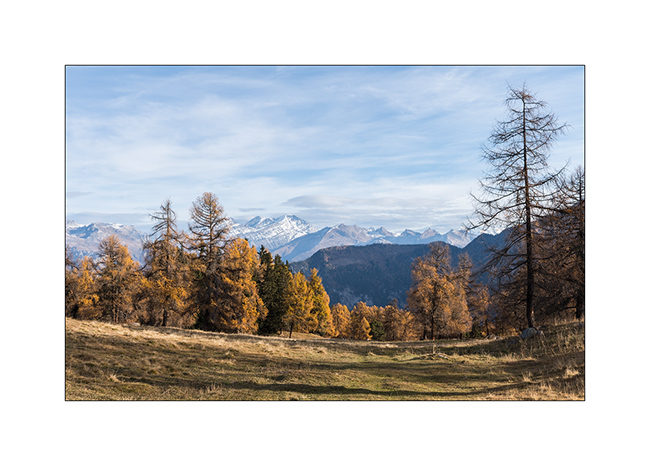
4. View over Upper Valais.
VivaLaVida then brought us back safely and I prepared her for wintering. She will be back soon… 😉
In the meantime, I will soon show here some pictures of another and different getaway. Stay tunned ! 😀
Valaisan getaway (continuation)
After the Sanetsch Pass, I wanted to show Isabelle the Aletsch Glacier, the largest of the Alps. So we went to the Upper Valais.
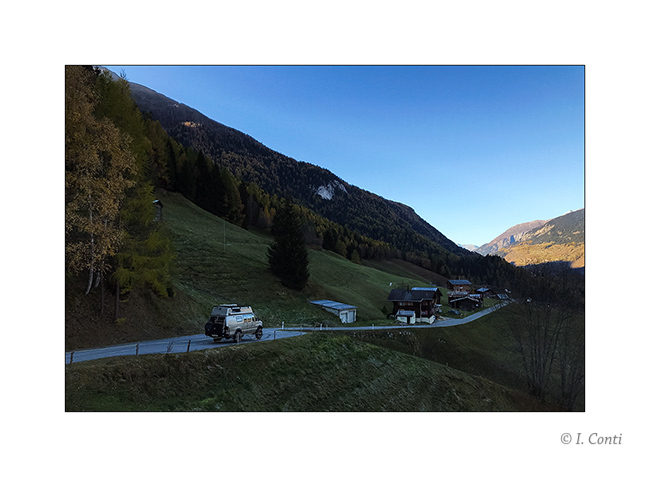
1. Boondocking down the Furggen pass.
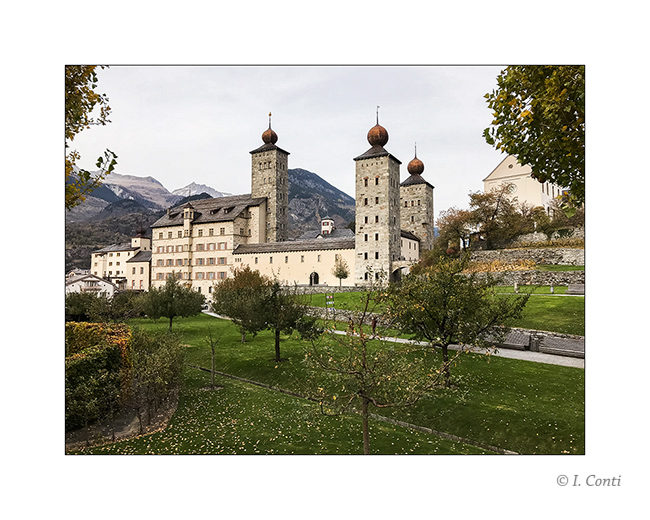
But in this season, the Eggishorn cable car was already closed. We thus went to visit Brig City before going further…
2. Brig castle.
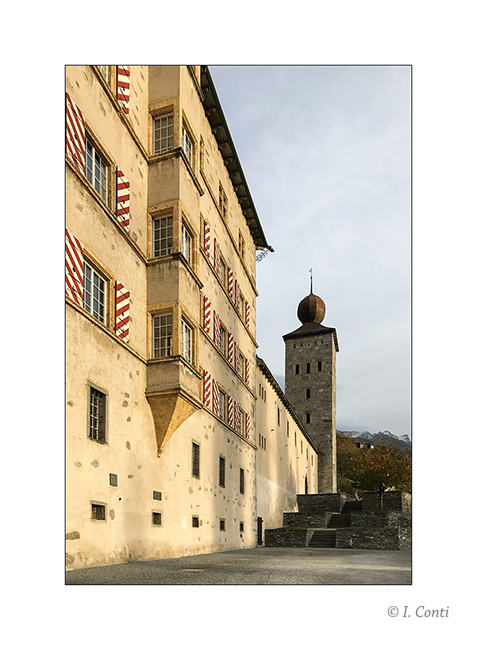
3. Walls…
4. Bridge…
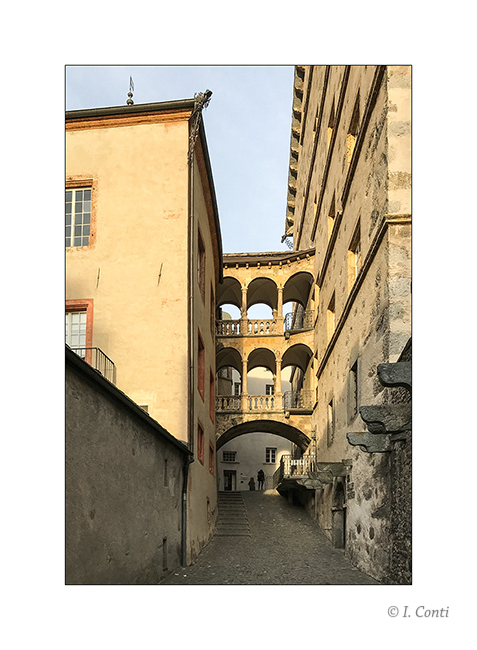
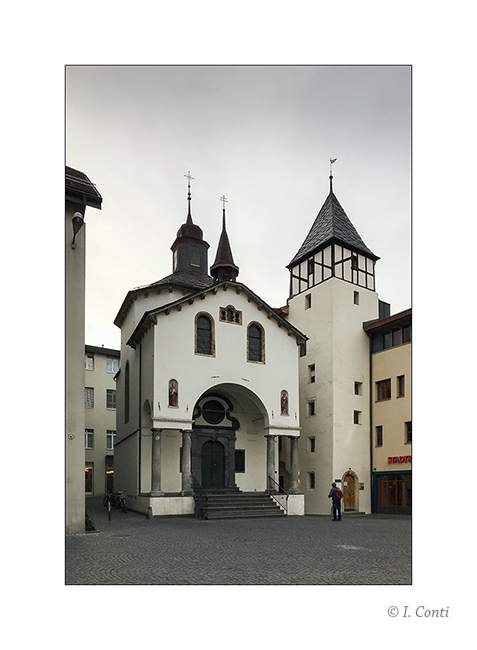
5. In the old town.
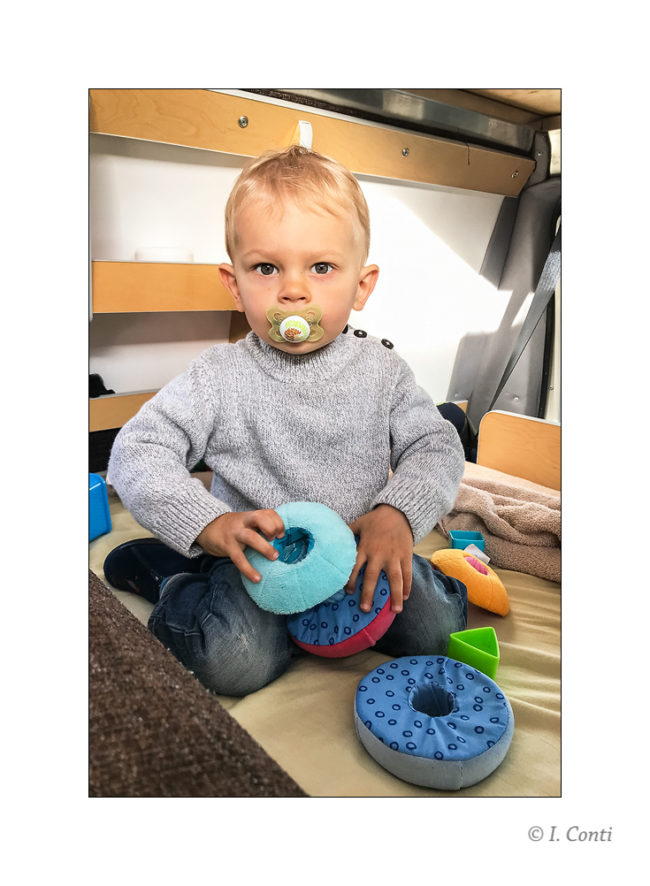
6. Emile still loves VivaLaVida!
7. We then drove to the Anniviers Valley.
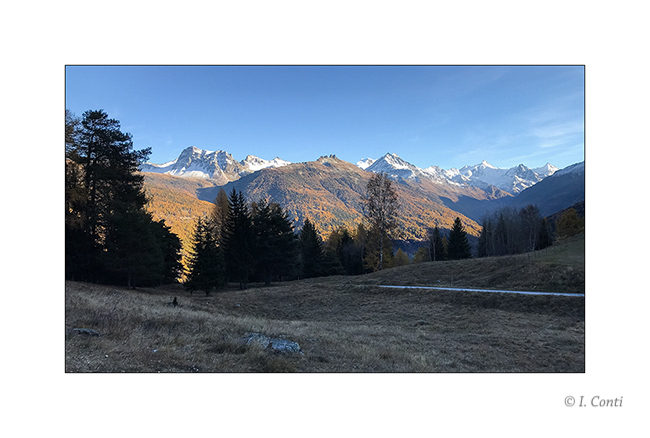
8. Over the Rhone Valley…
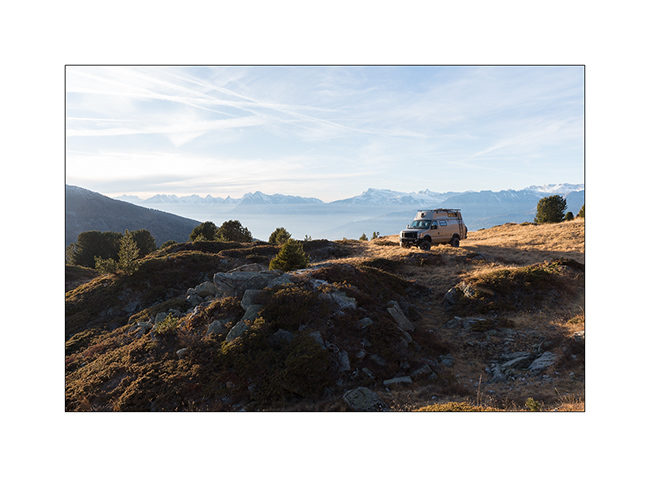
9. … and the Rechy Cove.
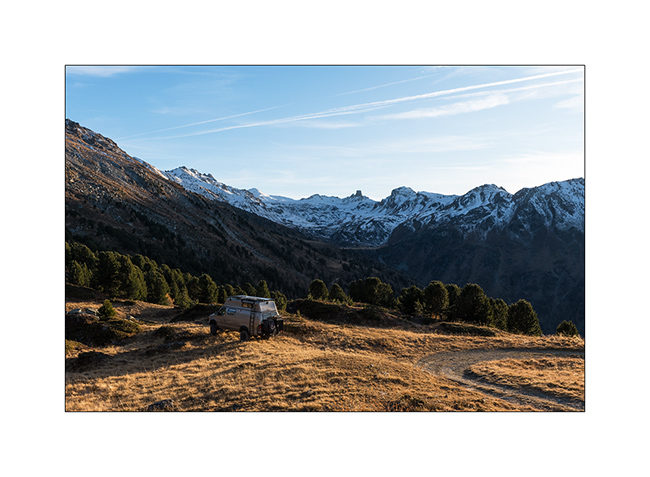
10. Quite sunset…
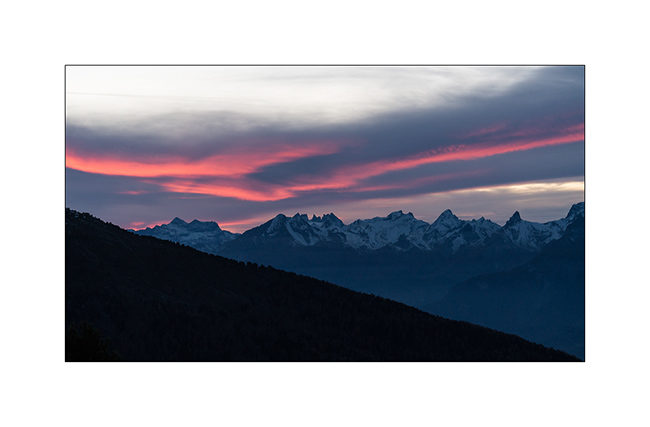
The end of ou long weekend still to come soon… 😉
 D5 Creation